


Choosing between moissanite and diamond feels bigger than picking a gemstone. It touches love, money, values, and how you see yourself.
If you are shopping for an engagement ring or fine jewelry, you have probably watched comparison videos, read forums, and maybe visited a jeweler. Both stones sparkle. Both look beautiful. Both have strong supporters.
This guide gives you a real, honest comparison of moissanite, natural diamond, and lab-grown diamond: sparkle, color, clarity, hardness, price, the diamond tester question, and the emotional side of the choice, because that matters just as much as the technical details.
💎 Shop moissanite at Paradise Gems
- Moissanite Engagement Rings – 1 carat solitaires from $129.99
- Oval Moissanite Solitaire 1CT – $199.99
- Men’s Moissanite Rings – iced out and signet styles
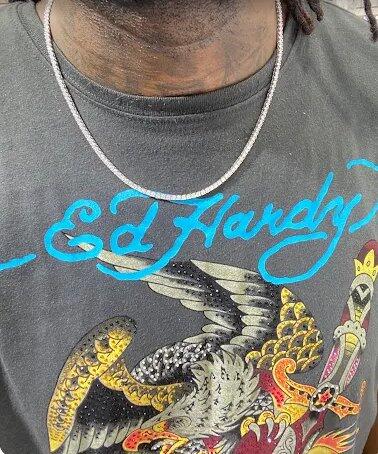
- Moissanite Tennis Chains – 2mm to 6mm
VVS D color moissanite · GRA certified · Passes diamond tester · Free shipping on all US orders · Delivery in 2–3 business days
Moissanite vs Diamond: The Quick Answer
- Sparkle: Moissanite has more fire (rainbow flashes). Diamond has a softer, classic white sparkle.
- Durability: Diamond is 10 on the Mohs scale, moissanite is 9.25. Both are hard enough for everyday wear.
- Price: A 1 carat natural diamond typically costs around $3,400 for the stone alone. A complete 1 carat moissanite ring at Paradise Gems starts at $129.99.
- Choose diamond if tradition and a natural, mined stone matter most to you. Choose moissanite if you want maximum sparkle and a bigger look for far less money.
Moissanite vs Natural Diamond vs Lab-Grown Diamond
| Feature | Moissanite | Natural Diamond | Lab-Grown Diamond |
|---|---|---|---|
| What it is | Silicon carbide, lab-created | Pure carbon, mined | Pure carbon, lab-created |
| Hardness (Mohs) | 9.25 | 10 | 10 |
| Refractive index | 2.65–2.69 (more sparkle) | 2.42 | 2.42 |
| Fire | Strong rainbow flashes | Classic white sparkle | Classic white sparkle |
| Typical 1 carat price | Complete rings from $129.99 at Paradise Gems | About $3,400 (stone only)* | About $600 (stone only)* |
| Standard diamond tester | Passes | Passes | Passes |
| Certificate | GRA | GIA and others | IGI, GIA and others |
| Mining required | No | Yes | No |
*Median asking prices for 1.00–1.24 carat loose stones across major online retailers, October 2026 (Carat Radar). Setting not included.

What Is Moissanite? Is It a Real Diamond?
Moissanite is made of silicon carbide. French chemist Henri Moissan first found it in 1893 in a meteor crater in Arizona, which is why it is called “the gemstone from the stars.” Natural moissanite is extremely rare, so the stones used in jewelry are grown in a lab.
Moissanite is not a diamond, and it is not a fake diamond either. It is its own real gemstone with its own chemistry and optical properties. It is also very different from cubic zirconia, which is much softer and gets cloudy over time. (See our moissanite vs cubic zirconia guide.)
A diamond is pure carbon. Natural diamonds formed deep in the earth over billions of years. Lab-grown diamonds are chemically the same as natural diamonds but are made in a lab in weeks.
Want the science? Read how moissanite is made.
Sparkle: Brilliance and Fire
This is where moissanite stands out. Its refractive index (2.65–2.69) is higher than a diamond’s (2.42), and it has more dispersion. In plain words, it bends light harder and splits it into more rainbow color.
In direct sunlight, moissanite throws bold rainbow flashes. Many people love that. Others find a diamond’s softer, white sparkle more classic. When you watch comparison videos, notice which one your eye goes to. That reaction tells you a lot about your taste.

Moissanite also keeps its sparkle. It does not get cloudy or fade with time. More on that in will moissanite lose its sparkle.
Color and Clarity
Diamonds are graded from D (colorless) to Z. Many buyers choose G to I color because those stones still look white but cost less. In warm indoor light, lower color grades can show a faint yellow tint. Natural diamonds also often have inclusions, and higher clarity grades raise the price a lot.
Moissanite used to have a yellow or green tint, but modern D–E–F color moissanite looks white in almost all lighting. Because it is grown in a lab, it is usually eye-clean. Every Paradise Gems stone is VVS clarity and D color, verified by a GRA certificate.
If you are very sensitive to color, you may notice a small difference next to a top-grade diamond. If you simply want a bright, white, clean-looking stone, moissanite delivers.
Hardness and Durability
Diamond is 10 on the Mohs hardness scale, the hardest natural material. Moissanite is 9.25, harder than sapphire, ruby, and almost every other gemstone. It is also very tough, so it resists chipping well.
In real daily wear, both stones are durable enough for an engagement ring you never take off. See can moissanite scratch for details.
Price: The Biggest Difference
Price is usually the deciding factor, and it is fine to admit that.
- Natural diamond: a 1 carat stone has a median asking price of about $3,400 in October 2026, before the setting. Top color and clarity cost much more.
- Lab-grown diamond: prices have dropped sharply. A 1 carat stone has a median of about $600, before the setting.
- Moissanite: at Paradise Gems, a complete 1 carat emerald cut solitaire ring is $129.99 and a 2 carat oval halo ring is $249, setting included.
Why the gap? Natural diamonds are mined, sorted, and heavily marketed, and their supply is tightly controlled. Moissanite is lab-grown with lower production costs. Lower cost does not mean lower quality. Read more in is moissanite expensive.
Does Moissanite Pass a Diamond Tester?
Yes. Moissanite conducts heat like a diamond, so it passes standard thermal diamond testers. Some newer multi-testers also measure electrical conductivity and can tell moissanite apart, and a trained jeweler with magnification can too. Every Paradise Gems moissanite piece passes a standard diamond tester and comes with a GRA certificate. Full details: does moissanite pass a diamond tester.
Moissanite vs Lab-Grown Diamond
Lab-grown diamonds are real diamonds with the same hardness and sparkle as mined ones, and they are now much cheaper than natural diamonds. So how do they compare with moissanite?
- Sparkle: moissanite has more fire. Lab diamonds look exactly like natural diamonds.
- Price: lab diamonds still cost more for the same size, especially in larger stones and in pavé or iced-out pieces with many small stones.
- Value over time: neither moissanite nor lab-grown diamonds hold resale value the way natural diamonds traditionally have. Buy what you love wearing.
For iced-out chains, tennis bracelets, and statement pieces with dozens of stones, moissanite gives you the biggest look for the money.
Popular Styles for Moissanite and Diamond
- Solitaire rings: classic and timeless in either stone.
- Halo rings: extra sparkle around the center stone, where moissanite’s fire really shows.
- Oval and pear shapes: elongated cuts that look bigger on the finger.
- Tennis chains and bracelets: rows of stones where moissanite saves the most money.
Before You Buy, Ask Yourself These Questions

- If money were not an issue, would I still choose moissanite?
- When I watch comparison videos, which stone do I lean toward?
- Will I feel comfortable telling people my ring is moissanite?
- Do I plan to upgrade or replace it later?
If you secretly want a diamond and settle for moissanite, you may regret it. If you love moissanite’s sparkle and value, you will likely feel happy and confident. There is no wrong answer, only what fits you.
How It Feels to Wear Each
Wearing a diamond can feel traditional and symbolic, tied to history and status. Wearing moissanite can feel smart and modern. Many owners love knowing they got a bigger, brighter stone and kept money for the wedding, a trip, or their future.
People who choose diamonds rarely question it. People who choose moissanite usually say they love the sparkle and the freedom it gave them. Regret usually comes from choosing against your true preference because of pressure.
Buy GRA Certified Moissanite at Paradise Gems
Paradise Gems is based in Atlanta, Georgia. Every piece is set with VVS D color moissanite, comes with a GRA certificate, and passes a standard diamond tester. Pieces are made in 925 sterling silver, with 14K gold plated options on many styles.
- Moissanite engagement rings
- Men’s moissanite rings
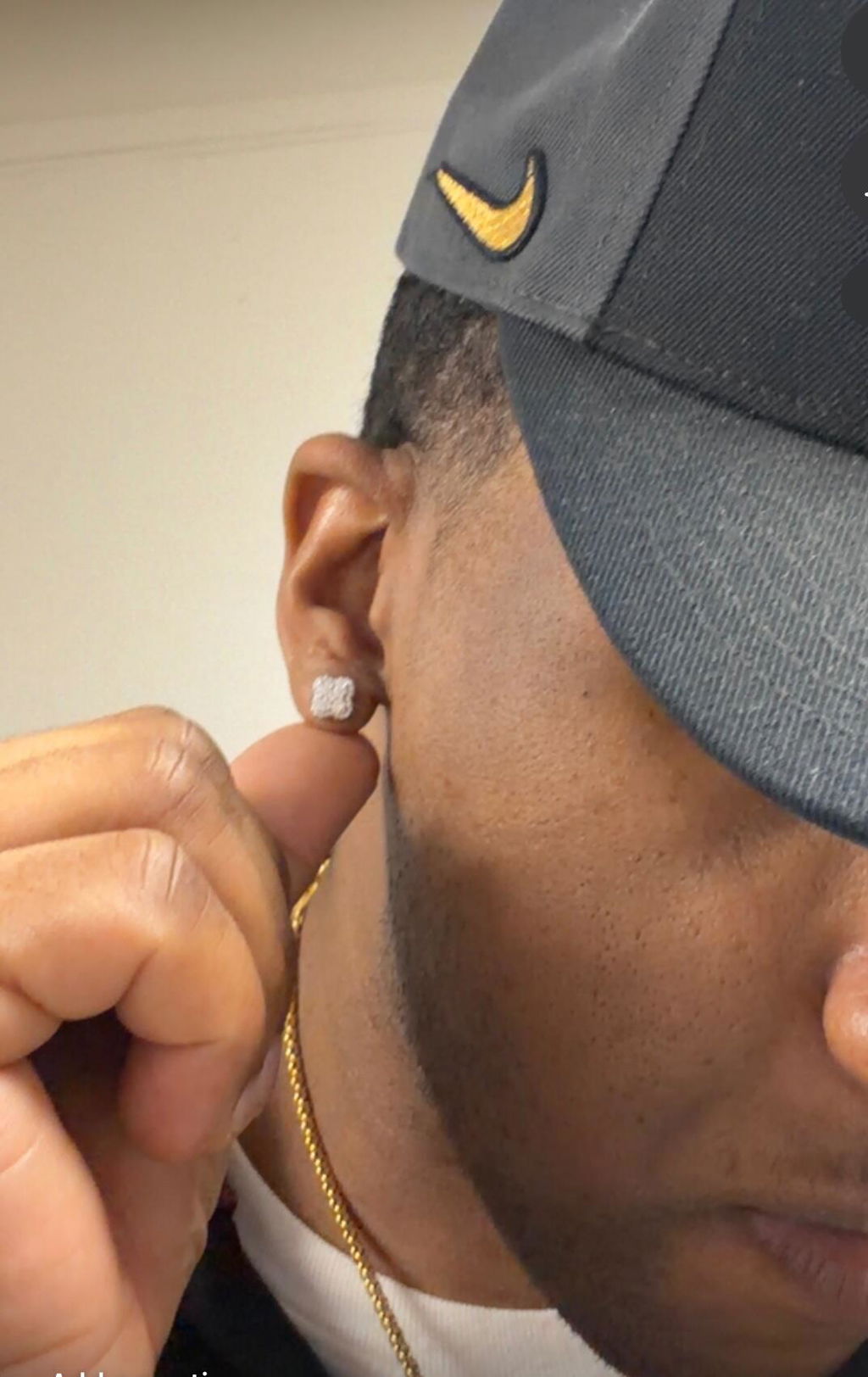
- Moissanite earrings
- Moissanite tennis chains and bracelets
FAQs
Which is better, moissanite or diamond?
It depends on your priorities. Diamond wins on tradition, natural origin, and maximum hardness. Moissanite wins on price, bold sparkle, and size for your budget.
Is moissanite a fake diamond?
No. Moissanite is its own real gemstone. It is not a diamond and not cubic zirconia. It simply looks similar to a diamond.
How much is a 1 carat diamond vs a 1 carat moissanite?
A 1 carat natural diamond has a median price of about $3,400 for the stone alone, and a lab-grown 1 carat about $600. A complete 1 carat moissanite ring at Paradise Gems starts at $129.99.
Can people tell moissanite from a diamond?
Most people cannot with the naked eye. In bright sunlight, moissanite shows more rainbow fire, which a trained eye may notice. A jeweler with magnification or a multi-tester can tell them apart.
Will moissanite last forever?
Yes. With normal care, moissanite keeps its sparkle for a lifetime. It does not get cloudy, fade, or change color.
Does moissanite come with a certificate?
At Paradise Gems, yes. Every stone comes with a GRA certificate showing its color, clarity, and carat weight.
Conclusion
Moissanite and diamond are both beautiful, durable choices. A natural diamond gives you tradition and a mined stone. A lab-grown diamond gives you a real diamond for less. Moissanite gives you the most sparkle and the biggest look for your money.
Listen to yourself more than trends. If moissanite is right for you, browse our GRA certified moissanite collection.
Leave a comment